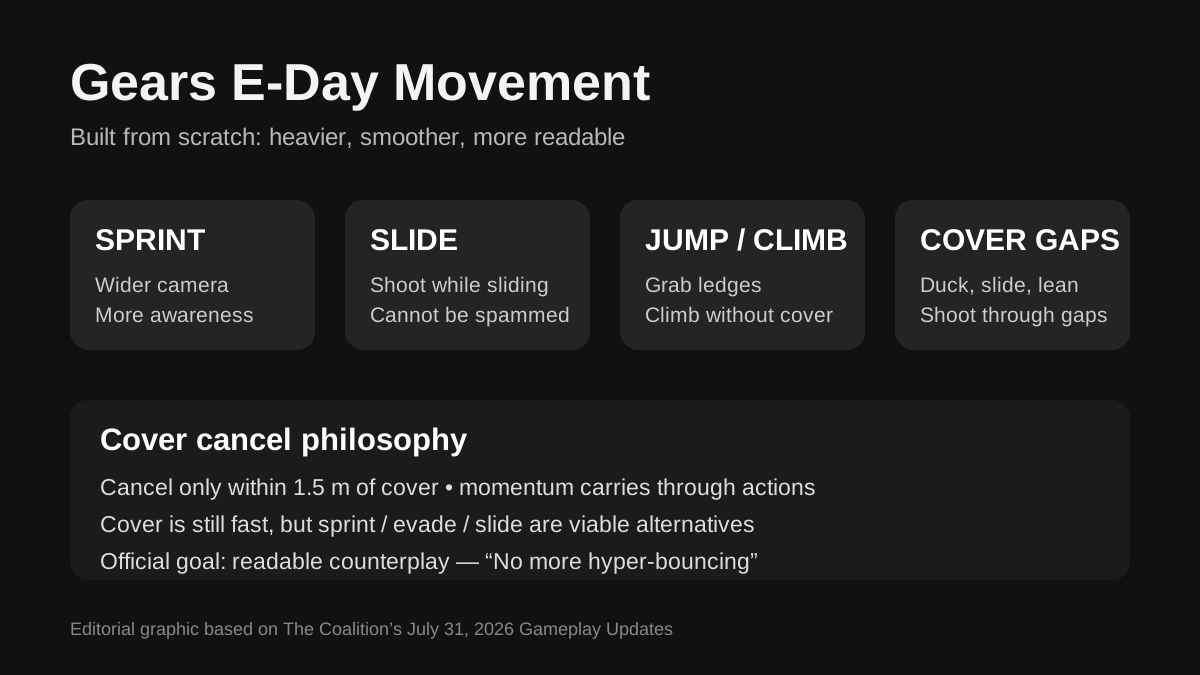
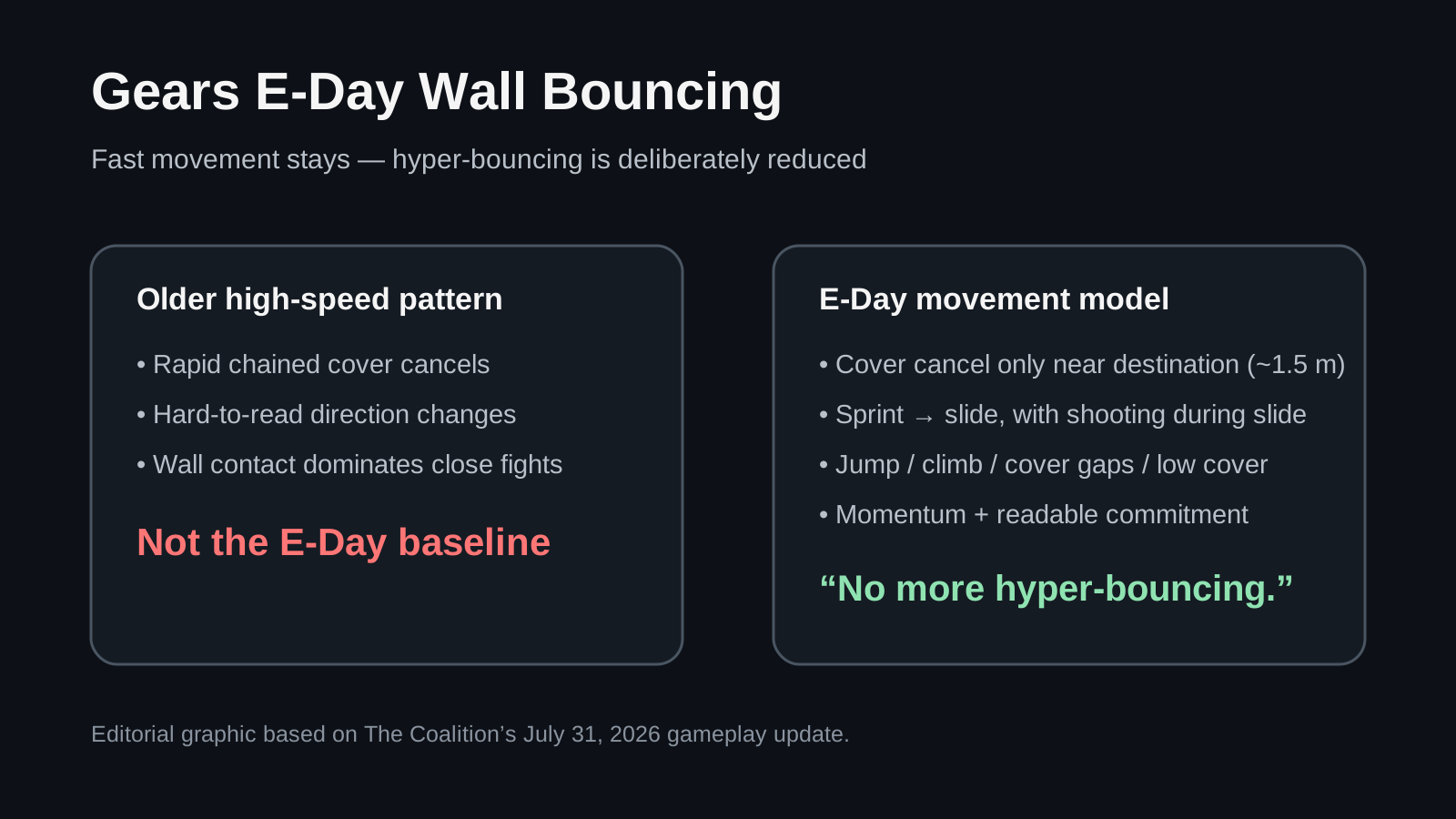
Gears of War: E-Day does not remove every fast wall or cover interaction, but it deliberately moves away from the hyper-bouncing style that could dominate close-range fights in earlier games. The Coalition's July 31 gameplay update gives the clearest official rule so far: once a player commits to entering cover, that entry can only be cancelled when they are within roughly 1.5 meters of the destination. The studio summarizes the goal with unusually direct language: “No more hyper-bouncing.”
That does not mean E-Day becomes slow or removes movement expression. The opposite is closer to the current design. The game adds sprint-to-slide movement, shooting during a slide, direct jumping and climbing, more cover heights and shapes, cover gaps, low-ground cover, mantle routes, and momentum-based transitions. The change is that those tools are meant to produce readable routes and deliberate commitments instead of one repeated high-speed wall-cancel loop.
Is wall bouncing removed in Gears E-Day?
The most accurate answer is no, not completely — but the old hyper-bounce baseline is gone.
The Coalition's official movement breakdown does not say that every wall cancel, cover transition, or rapid directional change has been deleted. It instead explains how the new cover system limits cancellation and transfers momentum between actions. That distinction matters because players often use “wall bouncing” to describe several different behaviors:
- snapping rapidly from one piece of cover toward another;
- cancelling a cover entry before reaching the wall;
- repeatedly chaining those cancels to reverse direction;
- using wall contact to create unpredictable close-range movement; and
- broadly using cover as part of an aggressive movement route.
E-Day is clearly targeting the third and fourth behaviors when it talks about eliminating hyper-bouncing. Fast cover use still exists, but The Coalition wants it to be readable enough that another player can understand the route and react.
The 1.5 meter cover-cancel rule
The most concrete new number is the roughly 1.5 meter commitment window.
In E-Day, once you begin a cover entry, cancellation is only available when you are close to the destination. That means a player cannot simply initiate a long-distance cover move and instantly reverse it from far away to create a constant zig-zag pattern.
This changes the risk model. If you commit to a wall, you need to think about where you will finish, what angle the opponent has, and whether that wall is actually the right destination. The movement can still be fast, but the decision has more consequence.
This is a meaningful difference from treating wall-bounce inputs as a near-universal escape tool. A bad route can now leave you committed long enough for an opponent to punish it.
“No more hyper-bouncing” does not mean “no skill movement”
The Coalition's wording is easy to overread. “No more hyper-bouncing” is not a statement that advanced movement is being removed from Gears.
E-Day adds several movement tools that can replace some of the tactical purpose wall bouncing used to serve:
- Sprint into slide: players can slide from a sprint and can fire while sliding.
- Jump and climb: reachable ledges, walls, and vehicles can be grabbed or climbed without first snapping into cover.
- Cover gaps: some holes and spaces under objects can be ducked or slid through.
- More varied cover: low cover, unusual shapes, openings, vehicles, and partially destroyed surfaces create different routes.
- Mantle without cover entry: players can cross some obstacles directly instead of entering and exiting cover first.
- Momentum transfer: actions are designed to carry motion forward rather than instantly reset movement speed and direction.
The result is a broader movement vocabulary. The skill ceiling does not have to depend on how quickly a player can repeat one cover-cancel pattern.
Can you shoot while sliding?
Yes. The official gameplay update explicitly confirms shooting during the slide.
That matters for players coming from a wall-bounce-heavy close-range style because a slide can now combine movement and offense in a way older cover transitions often could not. It gives you a way to change height and angle while still threatening an opponent.
The slide cannot be spammed indefinitely, according to The Coalition's description. The studio wants it to be a route and combat option rather than a replacement exploit that creates a new form of unreadable movement.
Does E-Day still feel like Gears?
The Coalition's stated goal is to preserve the series' weight, commitment, and cover-first identity while modernizing how players move between pieces of cover.
The sprint camera still begins with a visual nod to the Roadie Run. Cover remains central. The Gnasher remains a major close-range weapon. Power positions, corners, lanes, and cover geometry still matter. What changes is how many routes a player can use and how readable those routes are.
That is why the new system should not be understood as “Gears without wall bouncing.” A better description is Gears with wall movement placed inside a larger traversal system and constrained by more visible commitment rules.
How should returning wall-bounce players adapt?
1. Learn the new cover distance first
The 1.5 meter rule means distance matters more. Practice recognizing when a cover entry is still cancellable and when you are committed.
Instead of starting with maximum-speed inputs, first learn where the game considers a cover move reversible. That will prevent old muscle memory from turning into accidental overcommitment.
2. Add sprint-to-slide routes
A slide can change your line through a fight and still let you shoot. Practice using it to:
- cross a dangerous gap;
- enter cover from a different angle;
- move under a low obstacle;
- pressure around a corner; or
- change your profile during a Gnasher fight.
Do not assume the slide provides invulnerability or damage reduction. The official sources confirm the movement and shooting behavior, not a hidden defensive bonus.
3. Use jump and climb for flanks
Jumping in E-Day is not primarily about platforming. It is a combat-routing tool.
If a ledge, vehicle, or wall provides a higher angle or alternate path, direct climb actions can create a flank without requiring a traditional cover-to-cover sequence. This gives strong movement players something more valuable than simply repeating wall cancels: route creativity.
4. Read the map before the wall
Wall bouncing traditionally rewards awareness of nearby surfaces. E-Day expands that requirement. You now need to read:
- cover height;
- gaps;
- slide routes;
- climbable geometry;
- exposed lanes;
- Power Weapon locations in Versus; and
- where a committed cover move will leave you.
The best route may still involve a wall. It may also involve sliding beneath a vehicle, climbing a ledge, or using a low cover opening.
5. Rebuild muscle memory in Boot Camp or Combat Training
The final launch game includes training options designed for learning the new sandbox. Use those spaces to test movement actions one at a time before chaining them.
Older Gears guides remain useful historical context, but they cannot substitute for E-Day's actual timings. Any guide that assumes the old cover-cancel window is unchanged should be treated carefully.
Wall bouncing in Campaign vs Versus
The same rebuilt movement foundation spans Campaign, Horde Siege, and Versus, but the surrounding rules differ.
In Campaign and Horde Siege, enemy AI, classes, Weapon Mods, objectives, and PvE pressure can change why you use movement. In Versus, the stakes are player readability, equal starting loadouts, Power Weapon control, and close-range duels.
That means a movement technique that is useful for escaping a Locust push may not be optimal in a 4v4 Gnasher fight. The underlying mechanics are shared, but tactical value depends on the mode.
Wall bouncing FAQ
Can you wall bounce in Gears E-Day?
Fast cover interaction still exists, but the classic hyper-bouncing style is deliberately reduced. Cover entry cancellation is limited to roughly the final 1.5 meters before the destination.
Is wall cancelling still possible?
Yes in some form. The official update specifically discusses when cover entry can be cancelled, which confirms that cancellation still exists inside the rebuilt system.
Why did The Coalition change wall bouncing?
The published goal is to make movement more readable and committed while preserving speed and giving players more traversal choices.
Can you shoot during a slide?
Yes. The Coalition confirms that players can fire while sliding.
Is wall bouncing completely gone from Versus?
No official source says every wall-related technique is removed. What is confirmed is that hyper-bouncing is intentionally constrained by the new cover rules.
Should I practice old wall-bounce guides before launch?
They can teach historical concepts, but do not assume their timing or input rhythm transfers directly to E-Day. Learn E-Day's own movement in Boot Camp, Combat Training, or the final game.
Bottom line
Gears E-Day changes wall bouncing by making cover entry more committed and by expanding the alternatives around it. The roughly 1.5 meter cancel window and The Coalition's “No more hyper-bouncing” statement make it clear that extreme chained cover cancels are not the intended competitive baseline.
At the same time, E-Day remains a fast Gears game. Sliding, slide shooting, jumping, climbing, cover gaps, momentum, and more varied cover geometry create new ways to move aggressively. The best returning players will not simply abandon their movement skills; they will translate them into a broader, more readable system.
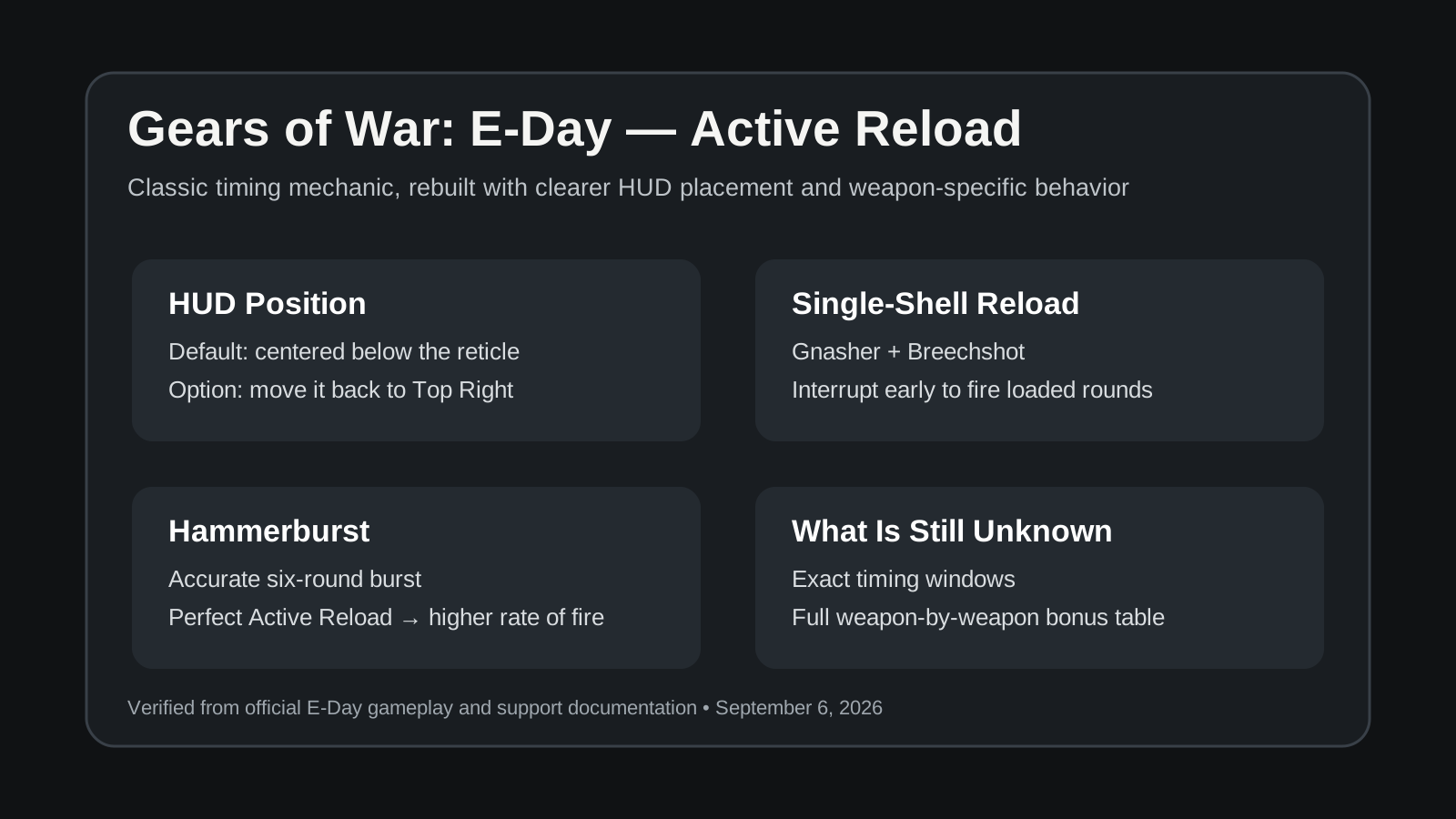
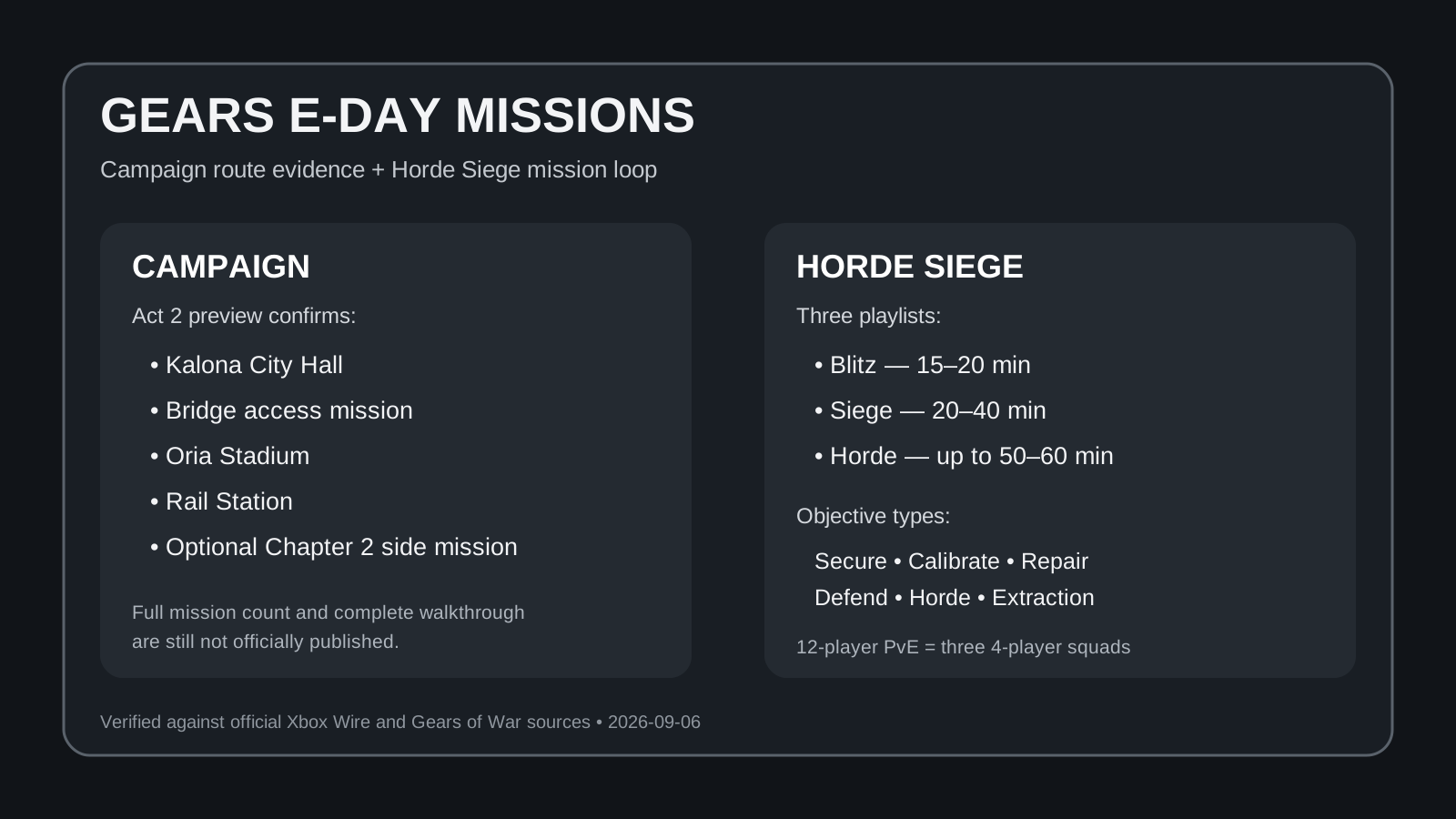
For the full movement system, continue to the Gears E-Day movement guide. For another returning core mechanic, see the Active Reload guide, and for campaign routing see the missions guide.