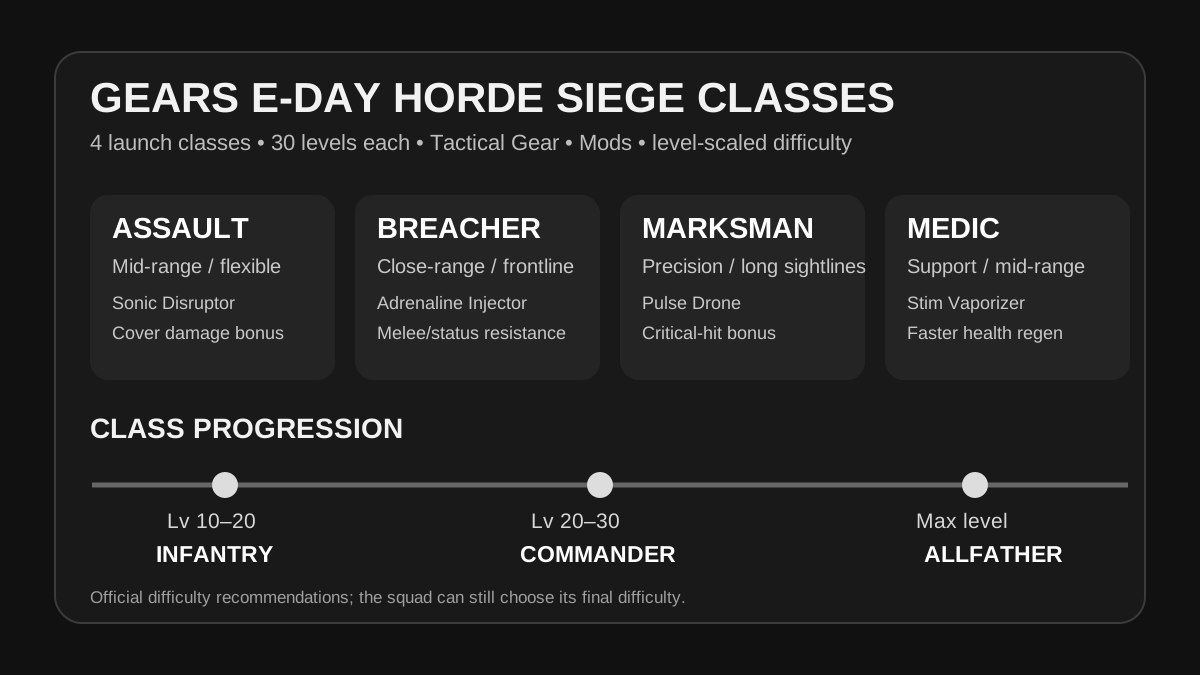
The four confirmed Gears E-Day Horde classes at launch are Assault, Breacher, Marksman, and Medic. They are class roles specifically built for Horde Siege, E-Day's 12-player PvE mode. Each one changes how you approach a mission through a unique starting loadout, combat bonus, Tactical Gear ability, and its own 30-level progression track.
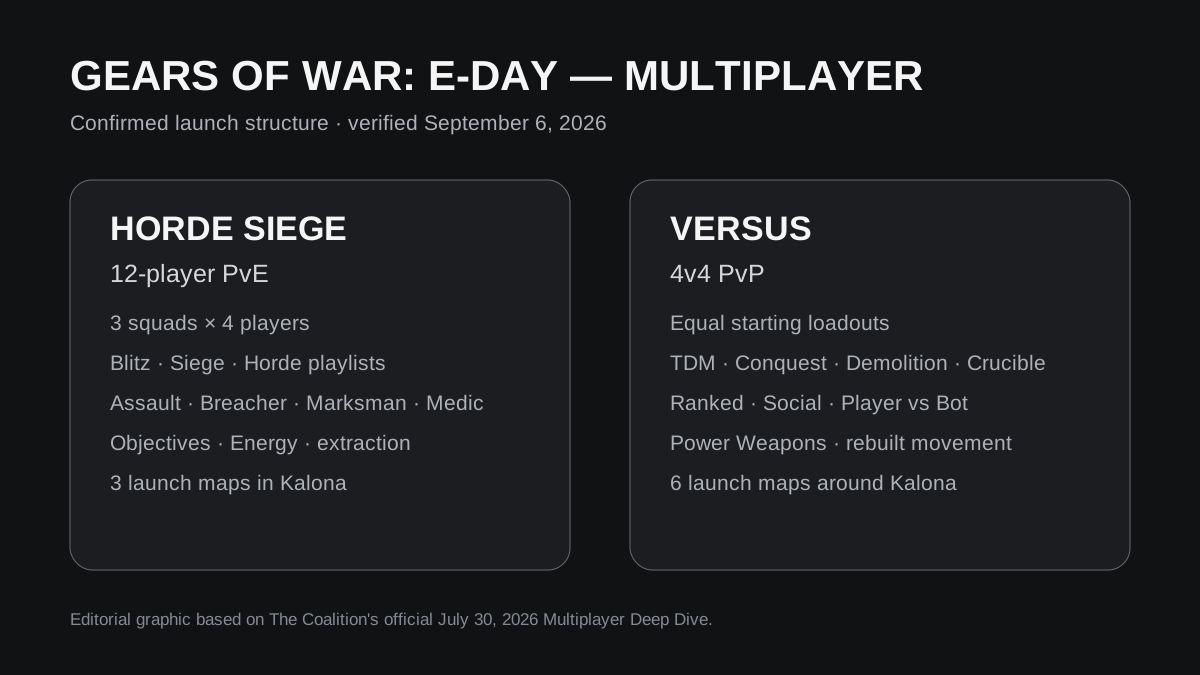
There is an important distinction for anyone coming from competitive Gears: these are not Versus classes. Versus uses equal starting equipment and disables Weapon Mods. Horde Siege is where class builds, Tactical Gear, Armor Mods, and class progression matter. The Coalition also says there is no mandatory squad composition, so you can mix roles or even deploy four copies of the same class.
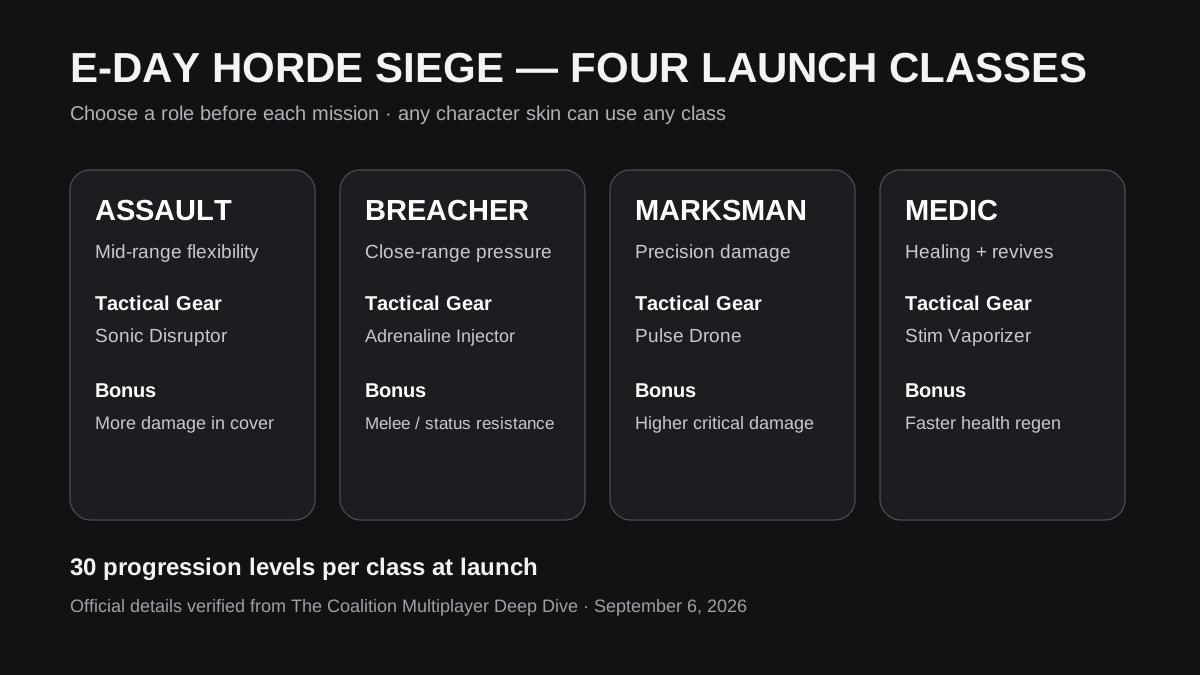
Gears E-Day Horde classes at a glance
| Class | Main role | Tactical Gear | Built-in bonus |
|---|---|---|---|
| Assault | Flexible mid-range fighting and objective defense | Sonic Disruptor | Increased damage while in cover |
| Breacher | Close-range pushes and frontline pressure | Adrenaline Injector | Better resistance to status effects and melee damage |
| Marksman | Precision damage across long sightlines | Pulse Drone | Increased critical-hit damage |
| Medic | Healing, revives, and mid-range support | Stim Vaporizer | Faster health regeneration |
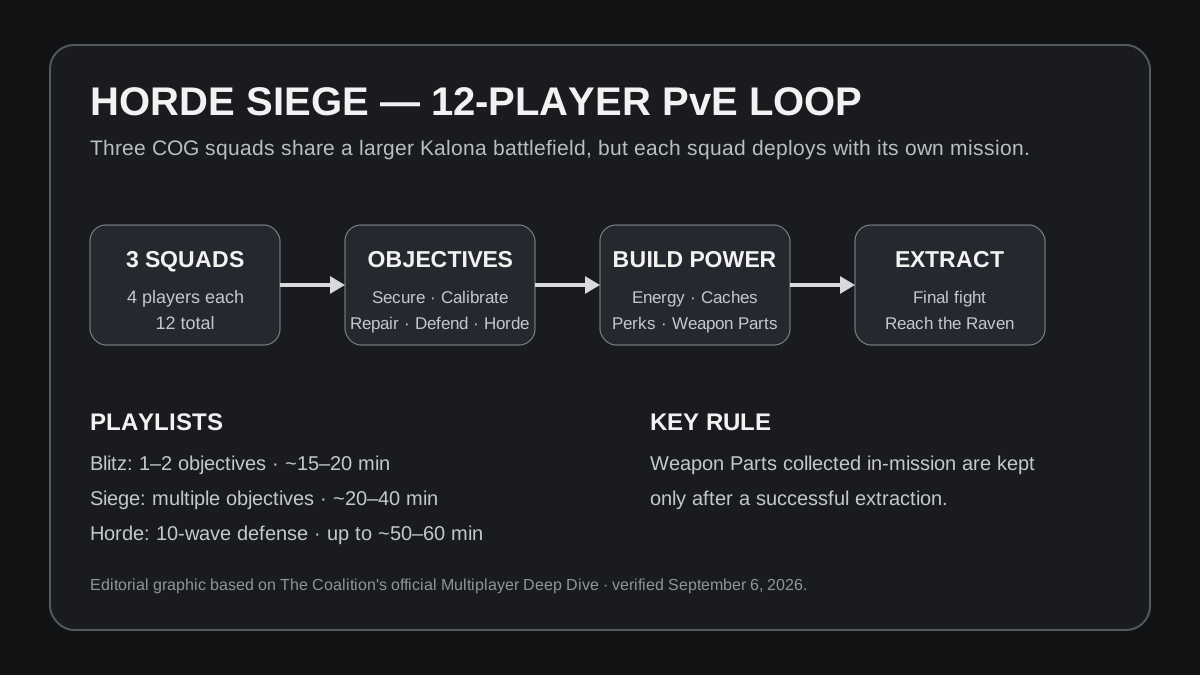
Those descriptions are based on the official roles rather than an invented tier list. Horde Siege maps span multiple blocks of Kalona, and objectives can move a squad between defensive holds, traversal, boss encounters, and extraction. A class that feels ideal during one phase may have a less comfortable job during another.
How classes work in Horde Siege
You select a class before deploying. The choice controls four fundamental parts of your build: starting equipment, a passive combat advantage, class progression, and Tactical Gear with a cooldown. Tactical Gear is the clearest identity marker. Assault can disrupt a wave, Breacher can reinforce a dangerous push, Marksman can expose targets, and Medic can recover nearby Gears.
Character appearance is separate from class choice. The Coalition says any character skin can be combined with any class, so a cosmetic character does not force a gameplay role. This is useful in a game launching with more than 60 multiplayer character skins: visual preference and squad composition do not have to compete with each other.
The system also permits duplicate classes. The developer's own example is a squad of four Breachers. That means E-Day is not enforcing the classic RPG rule of one tank, one healer, and two damage dealers. A balanced composition may be easier to understand, but unusual compositions are intentionally supported.
Assault: flexible mid-range control
Assault is the most general-purpose of the four launch roles. The class focuses on mid-range weapons and receives a damage boost while fighting from cover. Its Tactical Gear, the Sonic Disruptor, can stun waves of incoming enemies. The Coalition specifically points to objective defense as a situation where that disruption is useful.
That combination makes Assault easy to understand without making it simplistic. Horde Siege constantly asks squads to move between objectives, and a role that can contribute from ordinary cover positions has fewer awkward transitions than a specialist that needs very close or very long engagement distances.
For a new player, Assault is a sensible baseline because it teaches the same fundamentals that matter across the mode: use cover, watch the objective, time Tactical Gear when pressure rises, and keep enough ammunition and Energy for the next fight. It is not officially labeled a beginner class, however, and its usefulness will still depend on loadout unlocks and the mission in front of you.
Breacher: close-range aggression
Breacher is designed to push into dangerous close-range fights. Its Adrenaline Injector restores health and reduces incoming damage, giving the player a window to survive an aggressive move. The class also receives improved resistance to status effects and melee damage.
That does not mean Breacher should simply sprint into every enemy group. Horde Siege has limited Squad Lives, and a failed push can force teammates to recover COG Tags or spend time reviving. The better use of Breacher's durability is to create a controlled advantage: break a congested objective, reach a priority target, rescue a bad position, or exploit a short opening while the rest of the squad supports the push.
Breacher should become especially interesting as its progression opens new Armor Mods, Tactical Gear Mods, equipment, and Weapon Mods. Those unlocks can reinforce the frontline identity or let players build around a more specific weapon plan.
Marksman: precision and target information
Marksman takes advantage of Horde Siege's longer sightlines. Its passive advantage improves critical-hit damage, while the Pulse Drone tags Locust units for both the Marksman and the squad.
That tagging utility is easy to underestimate. Horde Siege can place three squads on one large battlefield while Invasion Events introduce threats such as Brumaks or Corpsers. Information about priority enemies can help a team decide whether to hold an objective, reposition, or focus damage before a threat reaches defensive cover.
Marksman naturally fits players who enjoy deliberate shots and target selection. It may be less forgiving in cramped fights, but a coordinated squad can protect the sightlines that let the class work. As difficulty rises, accurate critical damage should also become more valuable because wasting ammunition and exposure on poorly chosen targets carries a greater cost.
Medic: healing and cross-squad revives
Medic is a mid-range support class rather than a passive healer. Its Stim Vaporizer heals and revives any Gear within range, and the official description explicitly includes downed soldiers from other squads. Medic also receives faster health regeneration.
That cross-squad capability is particularly relevant to Horde Siege's 12-player structure. Three squads can cross paths on the same Kalona battlefield, so a Medic can create value outside the four-player group that selected the class. During an Invasion Event or a crowded extraction, that can matter more than a simple personal damage increase.
The limitation is positioning. A Stim Vaporizer cannot help a teammate who is too far away, and the class still has to survive long enough to use it. A good Medic therefore stays involved in the firefight while keeping enough awareness to recognize when recovery is more valuable than chasing another kill.
Class progression: 30 levels each
Every launch class has 30 progression levels. Completing Horde Siege missions earns Class XP for the class you played. Progression unlocks new loadout weapons and equipment as well as three major customization layers: Armor Mods, Tactical Gear Mods, and Weapon Mods. At milestone levels, classes also receive base health and damage increases.
Armor Mods adjust the soldier, including characteristics such as health, ammunition reserves, weapon swap speed, or special benefits. Tactical Gear Mods improve the class's signature equipment through changes such as cooldown, range, or added effects. Weapon Mods alter weapons themselves and can sometimes change functionality rather than simply raising a stat.
Weapon Mods must be unlocked on a class progression track and then purchased with Weapon Parts. Some Parts come from progression, but Horde Siege missions are the primary source. There is a risk attached: Weapon Parts collected during a mission are retained only if the squad successfully extracts. The Horde Siege guide explains that complete mission loop.
Weapon customization is shared across classes. If you configure a weapon on Assault and later equip that same weapon on another class, its mods and cosmetics carry over. Class progression itself remains meaningful, but the shared weapon layer reduces the feeling that every role has to rebuild the same gun from zero.
Difficulty scales with class level
Horde Siege difficulty is tied to class progression. The game suggests a difficulty based on class level, while the final choice remains with the squad. The official Deep Dive lists Infantry for experienced players around class levels 10–20, Commander for levels 20–30, and Allfather for max-level classes. Higher difficulty produces greater rewards.
This makes leveling more than a cosmetic grind. A developed class opens build options and access to harder missions, while tougher missions feed better rewards back into progression. It also means that copying a high-level build guide without having the required unlocks may not be useful on day one.
Best class combinations for a squad
There is no official best composition, but the four roles suggest several practical starting structures. A balanced squad can use one of each class to cover disruption, close-range pressure, precision damage, and recovery. Two Assault players plus a Medic can favor steady objective defense. A Breacher-heavy team can lean into aggressive close-range missions, while a Marksman-heavy group makes more sense when the map and objective provide long sightlines.
The key is that these are situational recommendations, not a ranking. Mission modifiers can change the rules, Poisons strengthen enemies after boss waves, and Invasion Events can bring large threats onto the battlefield. The strongest squad is likely to be the one that understands its current objective and coordinates Tactical Gear rather than the one that follows a fixed four-class recipe.
Which Horde class should you start with?
If you are unsure, Assault offers the clearest all-round introduction. Pick Breacher if you already know you prefer close-range weapons and aggressive positioning. Choose Marksman if precision shooting and long sightlines are your strengths. Choose Medic if you enjoy recovery, team awareness, and rescuing bad situations.
Do not overcommit to a single class too early. Because each class has its own progression and more classes are planned for seasonal updates, experimenting during the early game will help you understand which Tactical Gear and engagement range fit your playstyle before investing heavily in a preferred role.
Gears E-Day Horde classes FAQ
How many Horde Siege classes are available at launch?
Four are confirmed for launch: Assault, Breacher, Marksman, and Medic. The Coalition says additional classes will arrive through seasonal updates but has not named the future classes in the material verified for this guide.
Can two players choose the same class?
Yes. Duplicate classes are allowed. The official Multiplayer Deep Dive even gives four Breachers as an example, so there is no one-per-squad restriction.
Are Horde classes used in Versus?
No class system like this is confirmed for Versus. Competitive multiplayer is documented separately as 4v4 with equal starting loadouts and no Weapon Mods. See the multiplayer overview for the distinction.
Can Medic revive players from another squad?
Yes. The Stim Vaporizer can heal and revive Gears within range, including downed players belonging to another squad.
How many levels does each class have?
Each launch class has 30 progression levels. Leveling unlocks equipment and build options, while milestone levels can also increase base health and damage.
Is there a best Horde Siege class?
No official best class exists. The four launch roles are designed to complement each other, but Horde Siege deliberately permits duplicate and unconventional compositions. Your best choice depends on mission type, map, difficulty, unlocked mods, and preferred engagement range.
Bottom line
The Gears E-Day Horde classes give Horde Siege four distinct ways to contribute without forcing a rigid RPG composition. Assault controls mid-range fights, Breacher creates close-range pressure, Marksman delivers precision and target information, and Medic keeps players fighting through healing and revives. Each class has 30 levels and a build system that grows through Armor Mods, Tactical Gear Mods, and Weapon Mods.
Start with the role that matches how you naturally play, but treat squad composition as flexible. Horde Siege is designed around changing objectives and a shared 12-player battlefield, so adapting to the mission matters more than chasing a universal tier list.