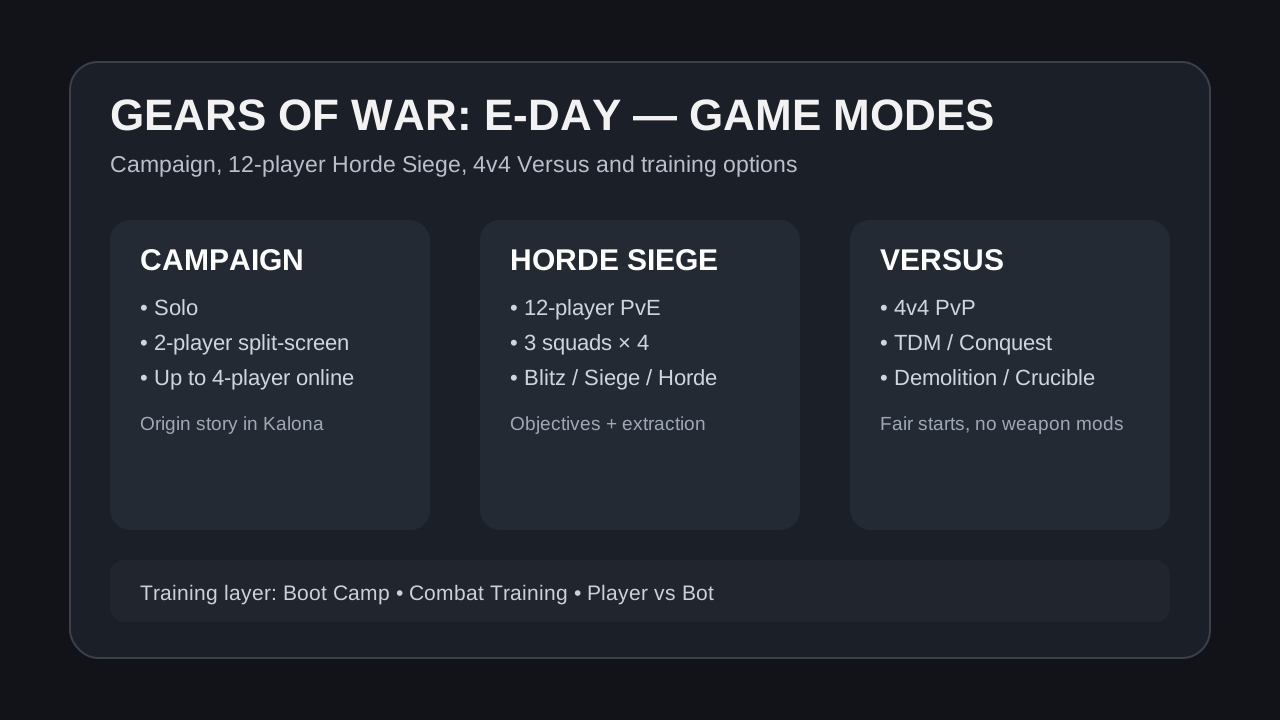
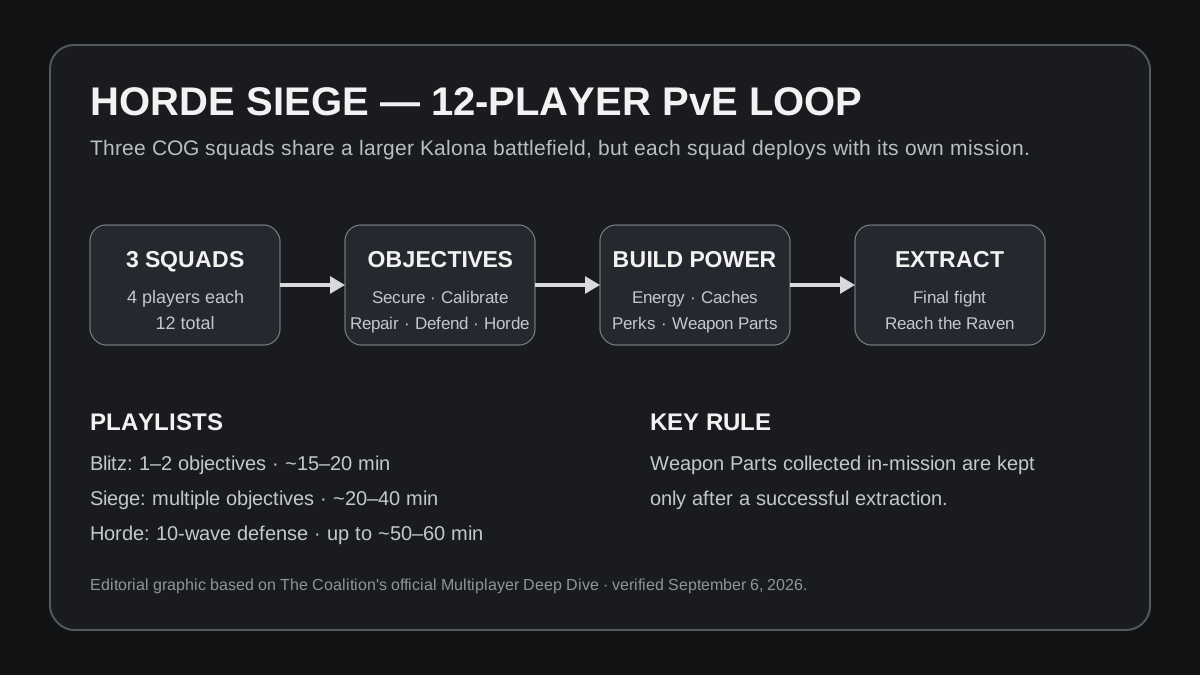
Gears E-Day Horde Siege is the new 12-player PvE evolution of Gears' classic wave-survival formula. Instead of keeping one squad inside one defensive arena, Gears of War: E-Day places three four-player COG squads on much larger maps across Kalona. Each squad deploys with its own mission, but all three operate inside the same active battle, can cross paths, and can benefit from equipment or fortifications left behind by other teams.
That distinction is important because Horde Siege is not simply “Horde with 12 players.” The Coalition has built the mode around movement, objectives, shared battlefield events, class progression, resource decisions and a final extraction. The August Open Beta gave players an early look at this structure; that beta ended on August 17, so this guide now focuses on the confirmed launch design for October 6, 2026, rather than presenting beta access as upcoming. citeturn0search0turn0search3
How many players are in Horde Siege?
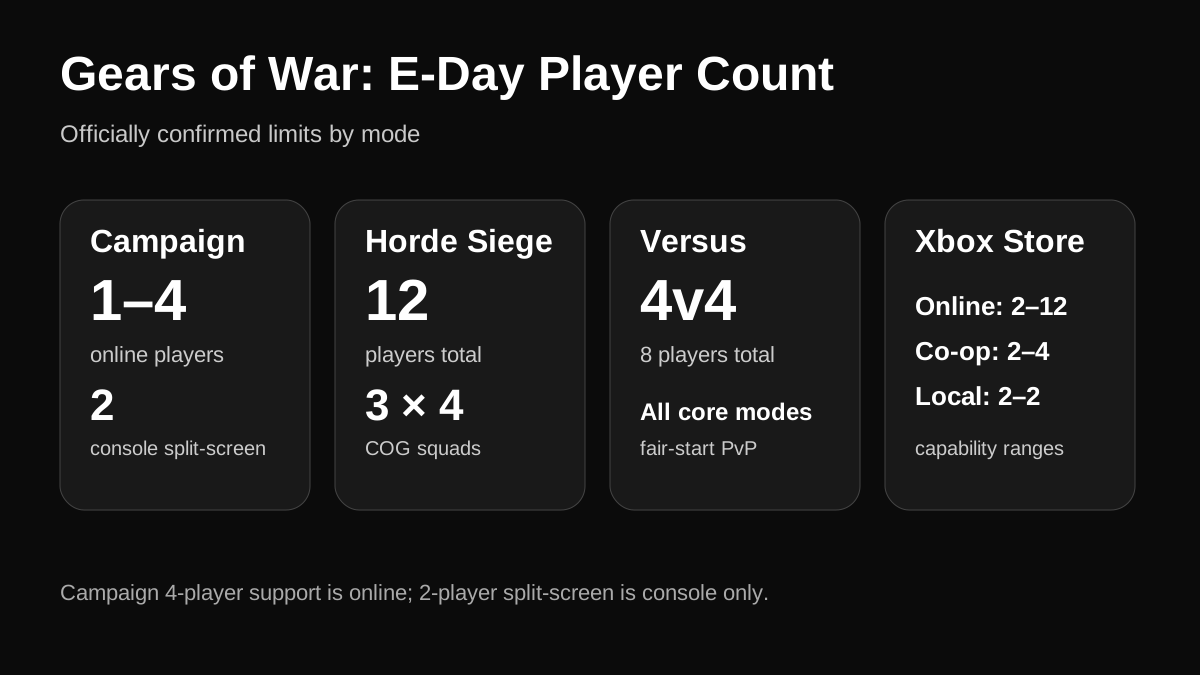
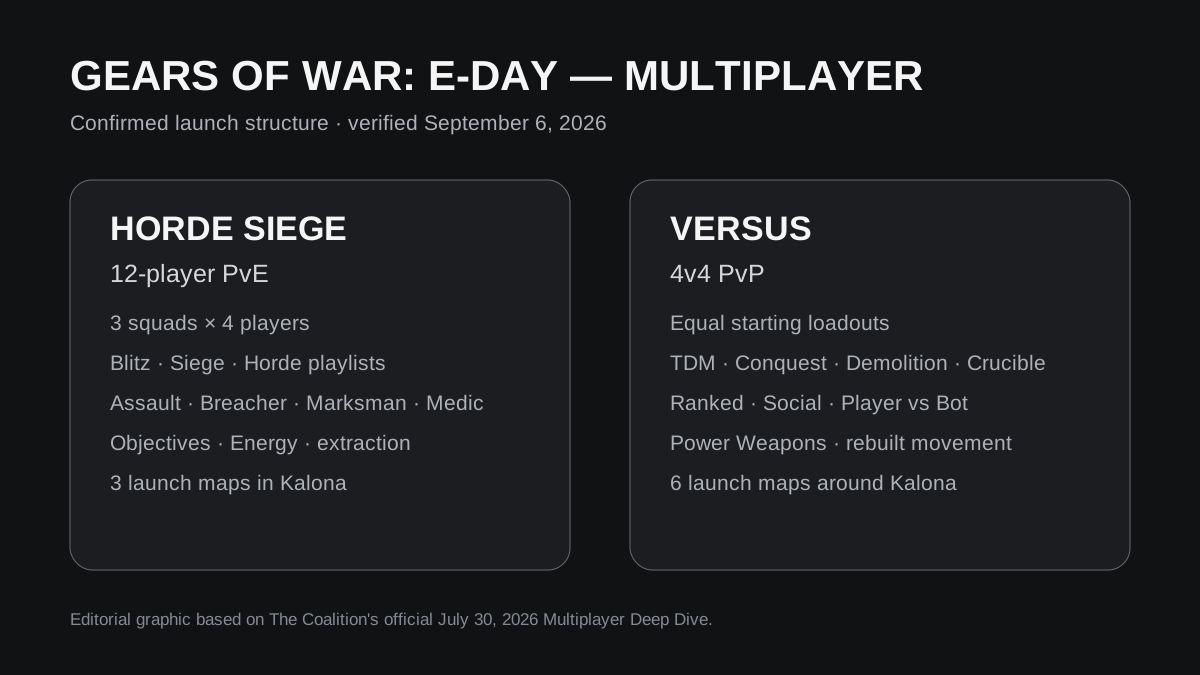
Horde Siege supports 12 players total, divided into three COG squads of four. The squads share the same larger battlefield, but they do not all receive one identical objective. The official description says each squad joins a battle already in progress with its own mission, moves through city blocks, tackles changing challenges and ultimately works toward a final fight and extraction. citeturn0search0
This structure creates a different kind of cooperation from a conventional four-player Horde lobby. Your immediate squad is still the unit you coordinate with most closely, but the other eight players matter. You may see another squad fighting nearby, encounter defenses they constructed, find useful equipment after they leave an area, or help recover a player from another team.
The maps are also designed around that scale. The Coalition says Horde Siege maps span multiple Kalona city blocks and provide more space and combat opportunities than previous Horde maps. Golden Quarter, the historic district used during the beta, demonstrated the idea. At launch there are three Horde Siege maps, with additional maps planned after release. citeturn0search0
The Horde Siege match loop
A Horde Siege run can be understood as six connected decisions:
- Choose a class. Your class determines a starting loadout, combat bonus, Tactical Gear and progression path.
- Choose a playlist and difficulty. Blitz, Siege and Horde offer different lengths and structures.
- Complete mission objectives. Most revolve around COG R.I.G. devices used to map Locust tunnels beneath Kalona.
- Build power during the run. Energy, Supply Caches, secondary objectives and Weapon Parts create choices between immediate survival and longer-term progression.
- Protect your Squad Lives. Death can be reversed through COG tags, but repeated full-squad wipes eventually fail the mission.
- Extract. The final phase requires surviving the landing-zone fight and reaching the Raven. Successful extraction is especially important when carrying Weapon Parts.
This is why the mode can feel more like an expedition than a single defensive match. The goal is not merely to kill a fixed number of enemies; it is to complete a route through an unstable battlefield and still have enough resources to get out.
Blitz vs Siege vs Horde
Horde Siege contains three main mission playlists. “Siege” is therefore one playlist inside the larger Horde Siege mode, not a separate multiplayer mode.
| Playlist | Official structure | Typical time | Best use |
|---|---|---|---|
| Blitz | 1–2 objectives | About 15–20 minutes | Short sessions and learning the basic loop |
| Siege | Multiple objectives with more traversal | About 20–40 minutes | The broad objective-driven Horde Siege experience |
| Horde | Defend one position for 10 waves | Up to about 50–60 minutes | Longer traditional wave-survival sessions |
These times are approximate ranges supplied by The Coalition rather than guaranteed match lengths. Difficulty, squad performance, optional encounters and wipes can all change how long a run takes. citeturn0search0
For a new squad, Blitz is the easiest format to learn structurally because there are fewer objectives and a smaller time commitment. That is editorial advice rather than an official difficulty ranking. Players who specifically want the classic defensive rhythm should look at the Horde playlist, while Siege is the middle ground that best demonstrates the larger maps and traversal system.
R.I.G. objectives explained
Many missions revolve around R.I.G.s, short for Resonation Imaging Geographer. In the fiction, these were mining devices used to locate underground Imulsion pockets. The COG repurposes them to map Locust tunnels beneath Kalona, giving the multiplayer objectives a direct connection to the E-Day setting.
Five objective archetypes are confirmed for launch:
| Objective | What your squad must do |
|---|---|
| Secure | Push Locust forces out of an area important to Kalona's defense. |
| Calibrate | Hold a sequence of zones while a R.I.G. is calibrated. |
| Repair | Find scattered components and restore a damaged R.I.G. |
| Defend | Protect an active R.I.G. until its mapping sequence finishes. |
| Horde | Defend one R.I.G. through 10 increasingly difficult waves. |
Mission modifiers and in-match events can change the pressure around these objectives, so completing “Defend” once does not mean every later Defend objective will play identically. The larger map also means the route to the objective can matter almost as much as the hold itself. citeturn0search0
Energy and Supply Caches
Killing enemies and completing objectives earns Energy for a shared squad pool. The unusual part is how that Energy is spent: collection is shared, but each player makes individual purchasing decisions at Supply Caches.
Supply Caches can offer weapons, grenades, defensive equipment and upgrades to Squad Perks. Energy can also be invested in fixed defensive positions and turret installations. Because turrets can be detached, a defensive purchase may later become a portable Heavy Weapon.
The strategic question is therefore not simply “do we have enough Energy?” It is “what does the squad need before the next objective?” Four players spending aggressively on personal upgrades can leave the group less prepared for a difficult defensive phase. A coordinated squad can instead distribute roles—one player improves survivability, another prepares explosives, while someone else invests in the position the team expects to hold.
COG tags, death and Squad Lives
Death in Horde Siege does not immediately remove a player from the mission. A killed Gear drops COG tags. A squadmate can retrieve those tags and bring them to a Supply Cache to revive the player. The cross-squad system goes further: players from another squad can also recover tags and help bring someone back. citeturn0search0
The real failure pressure comes from Squad Lives. If all four members of one squad are killed, that squad consumes a life. Once all of its Squad Lives are gone, the mission fails for that squad and it returns to the lobby with partial XP.
This makes regrouping valuable. A heroic solo push may look efficient until it creates a chain of deaths that costs an entire Squad Life. When an objective is overwhelming the team, pulling back, collecting tags and changing the approach is often more valuable than forcing the same route again.
Horde Siege classes
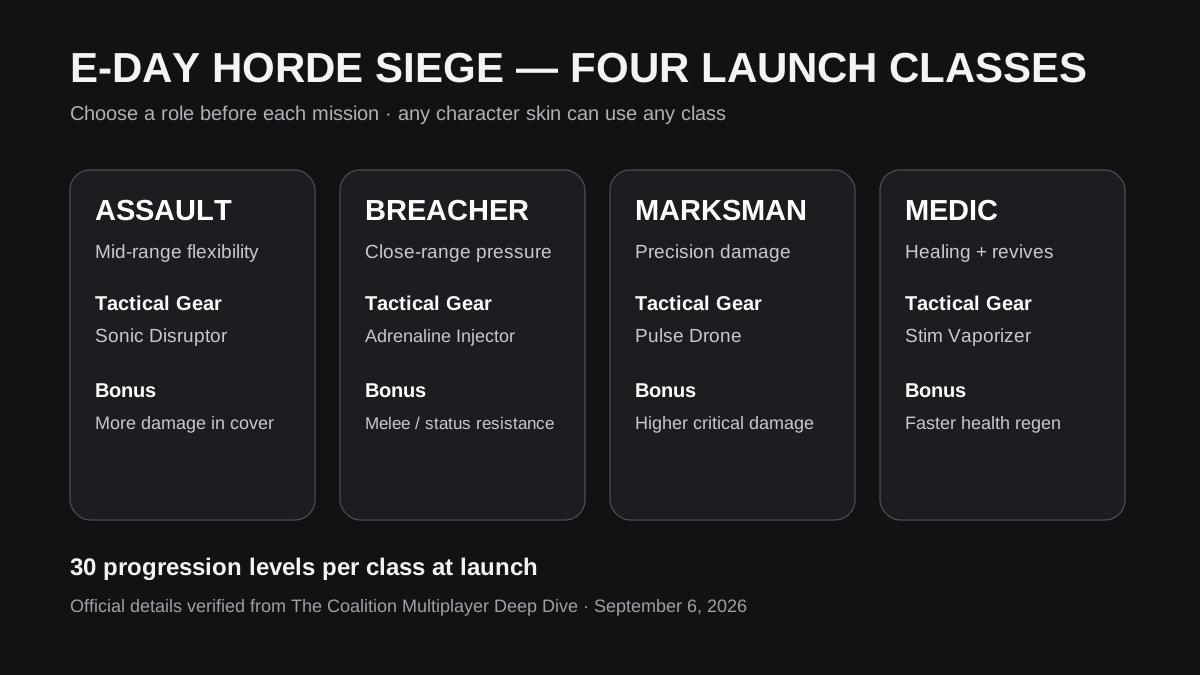
Four classes are confirmed for launch: Assault, Breacher, Marksman and Medic. Each combines a role, starting equipment, combat bonus and unique Tactical Gear. The Coalition explicitly says there is no mandatory composition; even four Breachers is a valid squad if players want to experiment. citeturn0search0
| Class | Main strength | Tactical Gear / bonus |
|---|---|---|
| Assault | Flexible mid-range combat | Sonic Disruptor stuns enemies; bonus damage while in cover |
| Breacher | Aggressive close-range fighting | Adrenaline Injector restores health and reduces incoming damage |
| Marksman | Precision damage at range | Pulse Drone tags Locust; improved critical-hit damage |
| Medic | Healing and revives | Stim Vaporizer heals or revives nearby Gears, including other squads |
The class choice is separate from character appearance. You can pair a class with the character skin you prefer rather than being forced to play one named character for one role. For the full progression and build breakdown, continue to the Horde Siege classes guide.
Class levels, mods and Weapon Parts
Each launch class has 30 progression levels. Completing missions awards Class XP, while progression unlocks weapons, equipment, Armor Mods, Tactical Gear Mods and Weapon Mods. Higher milestones also improve base health and damage. citeturn0search0
Weapon Mods are particularly important because E-Day allows more mechanical weapon customization in Horde Siege. Mods can make small tactical adjustments or substantially alter a weapon's function. The official example even includes adding a bayonet to the Gnasher.
Unlocking a Weapon Mod on the class track is only the first step. It then needs to be purchased with Weapon Parts. Some Parts come from class progression, but the strongest source is finding them during Horde Siege missions—and this creates one of the mode's biggest risk/reward rules: you must successfully extract to keep Weapon Parts collected during the mission.
Weapon customization is shared between classes. If you configure a Prototype Lancer and later equip that weapon on another class, the weapon's selected mods and cosmetics carry across rather than requiring a second build from scratch.
Why extraction matters
After the main objectives, the squad still has to survive the closing battle and extraction. This phase prevents the mission from becoming a checklist where rewards are guaranteed the moment the last R.I.G. objective completes.
If your team has collected valuable Weapon Parts, the final minutes become a risk-management problem. Spending Energy earlier may have made the objectives easier but left fewer options for the exit. On the other hand, hoarding resources can make it harder to reach extraction in the first place.
The best preparation is to treat extraction as another objective rather than an afterthought. Regroup, recover COG tags before pushing forward, check whether your loadouts still fit the expected fight and avoid unnecessary optional encounters when the squad is already carrying progression rewards it wants to keep.
What changed after the Open Beta?
The multiplayer beta is now historical context. Early Access ran August 6–10, 2026, and the public Open Beta ran August 13–17 on eligible Xbox Series X|S and PC platforms. Horde Siege and 4v4 Versus were the two main multiplayer pillars available during those weekends. citeturn0search3
As of September 6, The Coalition continues to describe Horde Siege as a major launch multiplayer mode. In its September 4 Xbox Podcast appearance, the team specifically discussed watching players engage with Horde Siege's large Kalona maps, multiple squads and new mechanics during the beta. That makes it useful evidence that the mode remains central heading into launch rather than a temporary beta experiment. citeturn1news17
Horde Siege launch content and post-launch plans
At launch, the confirmed framework includes three Horde Siege maps, four initial classes and the five R.I.G.-based objective types described above. The Coalition says post-launch support will add classes, maps, missions, modifiers and seasonal content. Multiplayer overall is planned around five themed seasons, beginning with Season 1: Emergence. citeturn0search0
That roadmap should not be interpreted as a complete list of future maps or classes. Those names and release dates have not all been published. This page will keep launch-confirmed details separate from announced-but-undated post-launch plans.
Horde Siege FAQ
Is Horde Siege 12-player co-op?
Yes. Horde Siege supports 12 players arranged as three four-player COG squads on the same larger battlefield. Each squad has its own mission while the squads can interact and influence the wider fight.
Is Horde Siege the same as classic Horde?
Not exactly. It evolves the Horde concept into larger, objective-driven missions with multiple squads and extraction. A more traditional 10-wave defensive format still exists as the Horde playlist inside Horde Siege.
What are the Horde Siege classes?
The four launch classes are Assault, Breacher, Marksman and Medic. More classes are planned through seasonal updates, but The Coalition has not yet published the complete future class list.
What is the shortest Horde Siege mode?
Blitz is the shortest documented playlist at roughly 15–20 minutes and usually contains one or two objectives.
Do I lose Weapon Parts if I fail extraction?
Weapon Parts found during a mission must be successfully extracted to be kept. This makes the final fight and Raven extraction part of progression, not merely an end-of-match animation.
Can other squads revive me?
Yes. Players can recover COG tags from fallen Gears, and members of another squad can help revive players as part of the shared-battlefield design.
Bottom line
Horde Siege is the PvE centerpiece of Gears of War: E-Day multiplayer: 12 players, three squads, large Kalona maps, mission objectives, four launch classes, Energy spending, persistent class progression and a meaningful extraction rule. The familiar Horde idea is still present, but the mode now asks squads to move through a living battlefield instead of simply holding one position forever.
For launch preparation, learn the short Blitz loop first, understand what your class contributes, coordinate Energy spending and never treat extraction as guaranteed. Then use the Gears E-Day multiplayer hub for the PvE-versus-PvP overview and the Horde classes guide for deeper build planning.