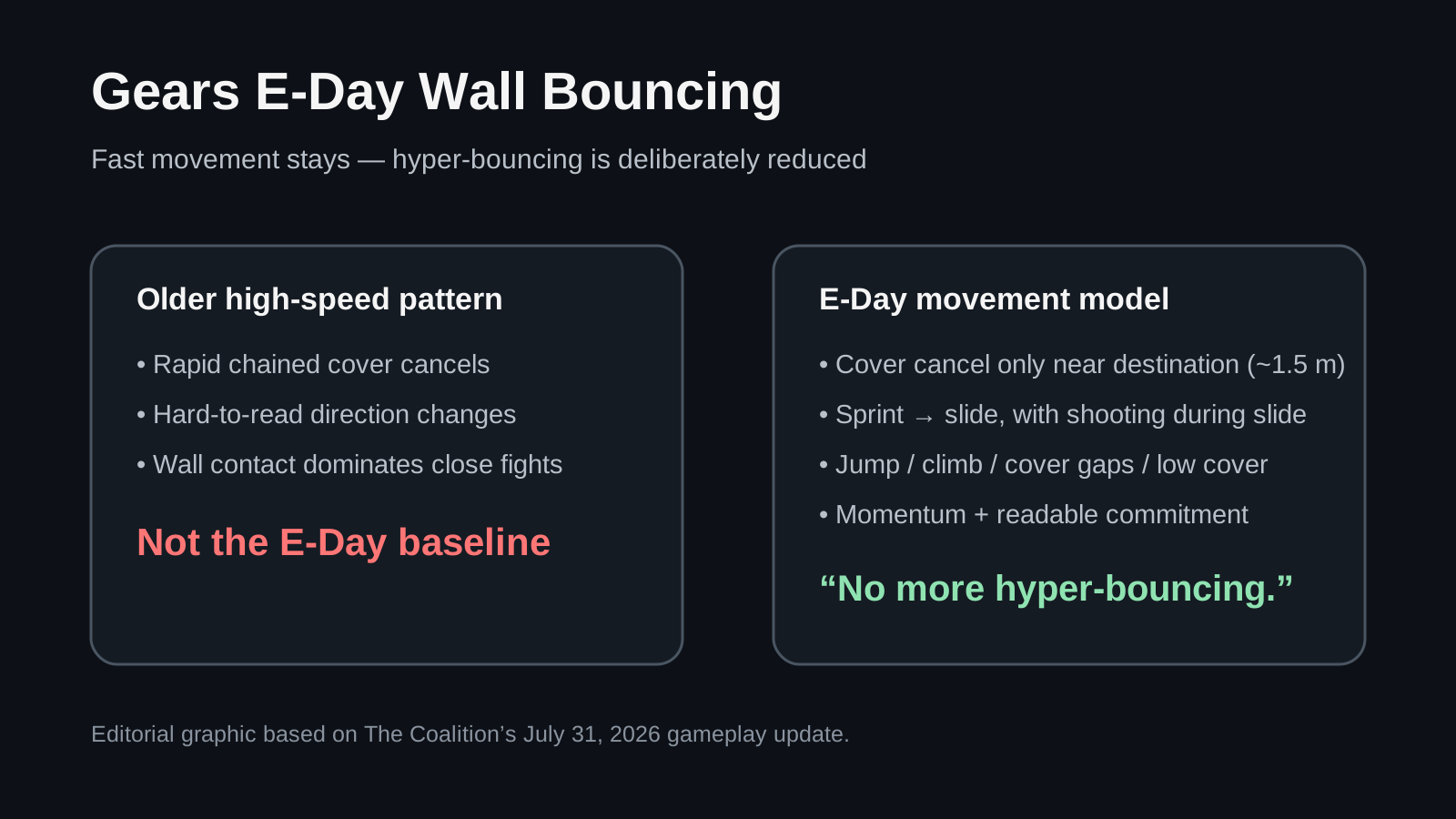
Gears E-Day movement keeps cover at the center of combat, but The Coalition has rebuilt almost everything around it. Sprinting now uses a wider camera and connects more smoothly into other actions. Slide can carry you under gaps, around corners, into cover, and even through a shot. Jump and climb open vertical routes. New cover gaps let you duck, slide, lean, or shoot through openings. And the old hyper-bounce style of movement has been deliberately reined in by stricter cover-cancel rules and stronger momentum.
The important point is not that E-Day is becoming a different genre. The official July 31 Gameplay Updates post says the team still wants the heavy feeling of armored Gears slamming into cover. The redesign is about adding more fluidity, more readable movement, and more choices without throwing away the cover-shooter foundation.
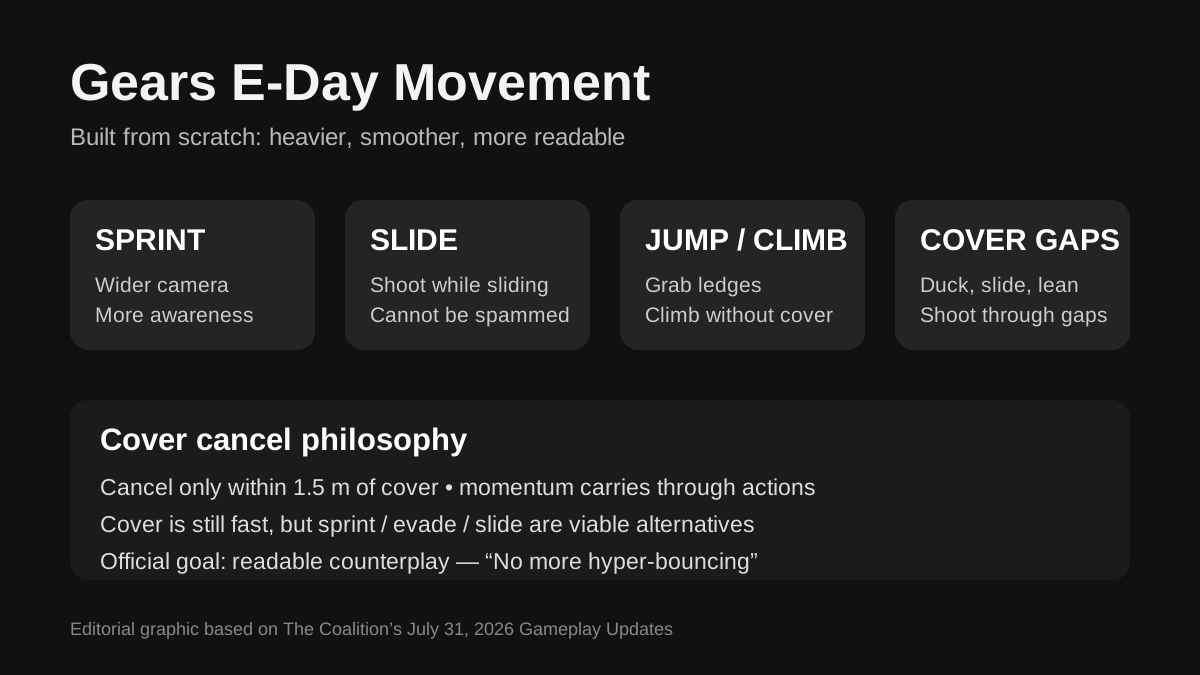
What changed in Gears E-Day movement?
The Coalition describes movement as the area where players will notice the biggest difference from recent Gears games. The system was built from scratch rather than copied forward from an older title. The goal is to preserve the weight and impact of being a Gear while giving players more ways to move through Campaign, Horde Siege, and Versus.
The confirmed movement toolkit now includes:
| Mechanic | Confirmed behavior | Practical effect |
|---|---|---|
| Sprint | Wider camera, more control, smoother links into other movement | Better battlefield awareness on longer runs |
| Slide | Triggered from sprint; can go under gaps, into cover, around corners; shooting is allowed during a slide | Adds aggressive and evasive route options |
| Jump | Opens vertical routes and timed gap crossings | More flanking options |
| Climb / mantle | Can be performed without entering cover first | Faster traversal over walls, ledges, and vehicles |
| Cover gaps | Can be ducked or slid through; some gaps allow aiming and shooting through them | More organic cover interaction |
| Low-ground cover | New lower protection states, including prone-like behavior when cover is damaged | Cover is less uniform than traditional waist-high walls |
| Cover cancel | Can only be cancelled within 1.5 meters of the destination cover | Reduces long-range hyper-bouncing and makes movement easier to read |
This is a significant shift because movement is no longer built around one dominant trick. Cover entry is still one of the fastest actions available, but sprinting, evading, sliding, climbing, and jumping now compete as legitimate movement choices.
Sprint and the updated Roadie Run
Sprint still begins with a recognizable Roadie Run-style posture. The official update says your Gear hunches into the first few steps, keeping that lower-profile visual language from previous games. What changes is what happens after the initial burst.
The sprint camera moves farther out to provide better battlefield awareness, especially during longer runs. That makes sense in E-Day because its combat spaces range from compact Versus maps to large Horde Siege arenas and wider campaign areas inside Kalona.
The extra visibility matters. In older games, the close Roadie Run camera emphasized speed and urgency but could make it harder to read the wider battlefield. E-Day's design gives you a better view of the next cover object, enemy firing lanes, side routes, and potential slide or jump opportunities.
This does not make sprinting safe. The Coalition explicitly warns that a wrong move can still leave you caught in the open. The difference is that players now have more tools to recover when a route goes wrong.
Slide is more than a traversal animation
Slide is one of the most important new mechanics because it connects movement and combat directly.
From sprint, players can trigger a slide to:
- get lower while approaching a target;
- move under a vehicle or through a low gap;
- slide directly into cover from a distance;
- move past a corner while preserving momentum; and
- shoot while sliding.
That last detail changes how aggressive the mechanic can be. The official Gameplay Updates post even gives an example of sliding past a corner and landing a close-range Gnasher kill.
The design has a built-in limit: you cannot spam slide continuously. The Coalition explicitly says timing matters. That makes slide a commitment rather than a permanent speed state.
For practical play, the best use cases are likely to be short bursts of repositioning. Slide can shorten the amount of time you remain upright while crossing a gap, create a lower route under geometry, or let you appear around a corner differently from a normal sprint. It can also put you in a bad position if you finish the animation without cover or a clear target.
Jump and climb add real verticality
Jump is new to the Gears movement vocabulary in a way that matters for combat. The Coalition says it gives E-Day more verticality and traversal choice than previous entries.
When you jump toward a wall, ledge, or vehicle that is within reach, your character can grab the edge and pull up. Certain maps also use gaps that can be crossed with a timed jump, creating alternative routes or flanks.
An equally important change is that mantling and climbing no longer require you to enter cover first. You can face an object and perform the action whether you are currently in cover or not.
That removes friction from older cover interactions. Instead of sticking to a wall before crossing it, movement can flow more naturally from sprint to jump to climb or from open space to a mantle.
This still does not turn E-Day into a platformer. Xbox and The Coalition have consistently framed jumping as a tactical mobility tool: getting over obstacles, taking higher ground, and opening flanking lanes.
Cover gaps make the environment more interactive
The rebuilt cover system supports more shapes and heights than previous Gears titles, and that creates a new category of cover gaps.
These can include spaces under trucks, holes in walls, narrow openings, and windows. Depending on the geometry, players can:
- duck through;
- slide through;
- lean out low from the edge;
- aim through the opening; or
- shoot through narrow gaps such as car windows.
That changes the way cover should be read. A wall is no longer always a solid divider. A truck may be cover, a low crawl route, and a firing angle at the same time.
The same philosophy applies to low-ground cover. The official update explains that players can hunker behind shorter walls or debris, and can even end up lower to the ground if the top part of their protection is destroyed. Movement is slower and the profile can be more exposed, but the system creates usable protection in places that older Gears games might not have treated as conventional cover.
What happened to wall bouncing?
This is the area where returning competitive players need to pay the most attention.
The official July 31 update explains the new cover-cancel system using four principles: Commitment, Momentum, Speed, and Fidelity.
Commitment: you have to get closer to cover
In E-Day, a cover entry can only be cancelled when you are within 1.5 meters of the cover object. Previous Gears games allowed players to cancel much earlier during the approach.
The practical effect is straightforward: you must travel farther toward the wall before cancelling. Your trajectory is therefore easier for an opponent to read, and chaining cancels has to be paced more deliberately.
The Coalition's wording is direct: “No more hyper-bouncing.”
That does not mean cover cancelling is gone. It means the extreme version of repeatedly bouncing between distant cover points at very high speed is no longer supposed to dominate movement.
Momentum: direction changes are less instantaneous
Every action now transfers motion more consistently. Players can still slow quickly during a cover cancel, but changing direction completely takes a short amount of time.
That creates a counterplay window. If an opponent commits to a direction, a well-timed shot can punish the transition instead of watching the player instantly reverse with little visual warning.
Speed: cover is still fast, but not the only fast option
Entering cover remains one of the fastest actions in the game. The difference is that overall movement speed has been balanced so cover entry and cancel are less of an extreme outlier.
Sprint, evade, and especially slide are now viable alternatives for maintaining movement speed. This is important for Versus because players no longer need to rely on repeated cover interactions as the only way to move quickly.
Fidelity: movement should be easier to read
The Coalition summarizes this philosophy as “slow is smooth, smooth is fast.” The idea is not to make players feel sluggish. It is to make actions connect more consistently so the opponent can understand what is happening.
Readable animation gives players more information: where the enemy's weapon is pointing, how long it may take them to fire after a movement action, how far they will slide, and how many steps remain before they reach cover.
That is a major competitive design change. Movement is still intended to have skill expression, but the opponent should have more opportunities to react.
How movement differs across Campaign, Horde Siege, and Versus
The same rebuilt sandbox is used across modes, but the value of each movement option changes with the situation.
Campaign
Campaign uses the expanded movement system to make Kalona more explorable. Wider spaces, rooftops, damaged buildings, low gaps, and alternative routes give the city more verticality without turning it into an open-world platforming game.
The Kalona guide explains how those environments are used across the three-night campaign structure.
Horde Siege
Horde Siege benefits heavily from mobility because squads operate across larger multi-block maps. Slide, sprint, jumping, and climbing can help reposition between objectives, supply caches, R.I.G. tasks, extraction routes, and invasion events.
The Horde Siege guide covers the full PvE loop.
Versus
Versus is where the revised cover-cancel rules matter most. Four-player teams play on maps built around cover lanes, power weapons, and movement risk. The new system tries to keep Gears' fast close-range identity while making opponent movement more legible.
That does not mean advanced movement will disappear. It means the skill expression is shifting from pure hyper-bounce speed toward timing, route choice, slide usage, jump paths, and deliberate cover cancels.
Movement tips based on the confirmed mechanics
These are practical interpretations of the official systems rather than claims about the final competitive meta.
First, plan your next cover before you sprint. The wider camera gives more information, so use it to identify the next safe point and the enemy angle that can punish the crossing.
Second, use slide when it changes the route. Sliding into exactly the same exposed lane as a normal sprint does not automatically make the push good. The move is strongest when it lowers your profile, gets you beneath geometry, or changes your corner timing.
Third, jump and climb when the vertical route creates a real advantage. A balcony or vehicle top can produce a flank, but it can also isolate you from your squad.
Finally, treat cover cancels as commitments. The 1.5-meter rule means you travel much closer to the wall before breaking off. Use that intentionally rather than trying to recreate older hyper-bounce patterns.
What movement details are still unknown?
Even after the detailed July update, some important specifics remain unpublished:
- exact controller and keyboard bindings for every action;
- precise movement-speed values;
- slide cooldown or recovery timing;
- jump distance and mantle thresholds;
- exact cover-cancel frame windows;
- whether specific competitive playlists apply additional movement tuning; and
- how launch balance patches may change movement after release.
Those details should come from the final game, official patch notes, or reliable frame-by-frame testing rather than guesswork.
Gears E-Day movement FAQ
Does Gears E-Day still have Roadie Run?
Yes. Sprint still begins with a Roadie Run-style crouched burst, but the camera pulls back for better visibility and the movement flows more naturally into slide and other actions.
Can you shoot while sliding?
Yes. The Coalition explicitly says shooting during a slide is supported. The mechanic cannot be spammed continuously, so timing remains important.
Can you jump in Gears E-Day?
Yes. Jump can be used to grab reachable ledges, cross certain gaps, and create vertical flanking routes.
Do you have to enter cover before climbing?
No. E-Day allows mantle and climb actions without entering cover first. Face the object and perform the climb when the environment supports it.
Are there cover gaps?
Yes. Low gaps, wall openings, vehicle spaces, and narrow firing holes can be used for traversal or shooting depending on the environment.
Is wall bouncing removed?
Cover cancelling remains, but the hyper-bounce style has been deliberately reduced. Cancels only become available within 1.5 meters of the destination cover, and momentum makes instant direction changes harder.
Is movement slower than older Gears games?
The design is more nuanced than simply “slower.” Cover remains fast, but movement speed is more balanced across sprint, evade, slide, and cover actions. The goal is smoother, more intentional, and more readable motion.
Bottom line
Gears E-Day movement is a rebuild, not a rejection of classic Gears. Cover is still life, but the space around cover is far richer. Sprint gives more awareness, slide connects movement and gunplay, jump and climb add verticality, cover gaps create new routes, and the cover-cancel system reduces hyper-bouncing in favor of readable momentum and timing.
For returning players, the biggest adjustment will be resisting the urge to treat old wall-bounce habits as the only advanced movement language. E-Day gives you more tools, but asks you to commit to them more deliberately.